
By Khin Maung Myint
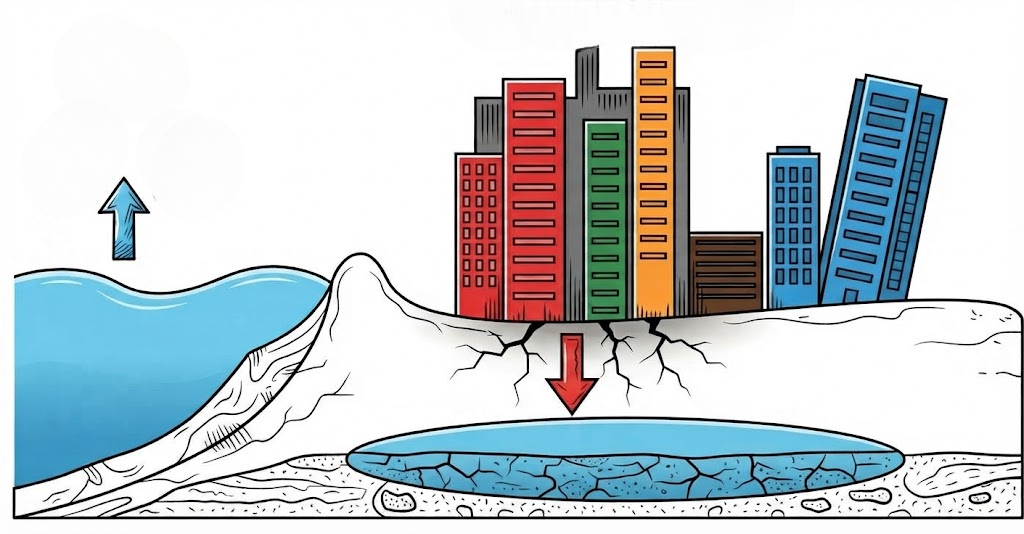
While global headlines frequently focus on rising sea levels driven by climate change, a parallel and often faster-moving crisis is happening beneath our feet: land subsidence, or the gradual sinking of the Earth’s surface. From the fast-growing megacities of South-East Asia to historic hubs around the globe, urban centres are dropping at rates that vastly outpace the melting of polar ice caps. In some regions, the ground is dropping by several inches every year, transforming a slow geological shift into an urgent, existential threat for millions of urban residents. Globally, oceans are rising by a fraction of an inch per year. However, in many sinking cities, relative sea level rise is amplified tenfold because the ground itself is plummeting. When land drops, high tides, storm surges, and heavy downpours permanently claim areas that were once safe, turning streets into canals and contaminating freshwater supplies with saltwater.
Global Hotspots: A Regional Breakdown
South-East Asia has emerged as one of the world’s primary hotspots for severe land subsidence due to rapid urbanization, coastal delta geography, and heavy groundwater extraction.
• Jakarta, Indonesia: Widely considered one of the fastest-sinking cities in the world, parts of Jakarta drop by as much as 10 inches annually due to excessive groundwater extraction. This rapid sinking forced Indonesia to initiate massive plans to move its national capital from Jakarta to Nusantara in East Kalimantan, Borneo.
• Bangkok, Thailand: Built on soft marine clay deposited by the Chao Phraya River delta, Bangkok has historically faced severe subsidence due to intensive groundwater pumping. While strict regulations and alternative water policies in recent decades have slowed its rate of sinking, it remains vulnerable to flooding and requires ongoing adaptations like large underground retention basins.
• Ho Chi Minh City, Vietnam: Located in the low-lying Mekong Delta region and downstream of the Dong Nai River, the city rests on compressible alluvial sediments. Rapid urbanization and heavy reliance on groundwater compound the risks of seasonal flooding and tropical storms.
• Manila, the Philippines: Excessive groundwater extraction paired with rising sea levels causes coastal districts around Manila Bay to sink significantly faster than the global average.
• Yangon, Myanmar: As industries and the city’s population have grown over many decades, the heavy reliance on private tube wells has caused underground water tables to drop and soft delta-like sediments to compact. Combined with heavy monsoon floods, rising sea levels, the emergence of many high-rise buildings and infrastructure, and proximity to active fault lines, unchecked subsidence risks turning parts of the city into vulnerable, flood-prone lowlands.
Beyond South-East Asia
Major urban centres worldwide face similar fates – Mexico City drops by up to 14 inches a year as underground aquifers are drained, and even New York City experiences a slow, fractional descent into the Atlantic.
• The Root Causes: Why Is the Ground Dropping? While natural geological processes play a minor role, human activity remains the primary engine behind modern land subsidence:
• Aquifer Compaction: Pumping water from underground aquifers faster than nature can replenish it causes underground sediment pores to lose internal pressure, permanently collapsing and compacting the earth.
• Infrastructure Overload: The sheer concentration of skyscrapers, heavy transit systems, and asphalt creates a massive urban infrastructure weight that compresses soft sub-surface soils.
• Soil Oxidation: In areas like parts of the Netherlands and coastal wetlands, draining organic-rich soils for farming or development causes the land to oxidize, shrink, and vanish.
• Resource Extraction: The industrial extraction of oil, gas, or heavy hydrocarbons leaves underground voids that inevitably cave in under surface weight.
The Direct Consequences of Sinking Cities
The direct consequences of land subsidence extend far beyond a general loss of elevation. Because the ground drops unevenly, it triggers a cascade of severe environmental, structural, and socioeconomic hazards:
• Dramatically Increased Flooding (Chronic and Severe): As land drops, relative sea level rise is magnified. Coastal and river-delta cities experience deeper, longer-lasting, and more frequent floods. Heavy downpours and high tides regularly turn streets into canals because gravity-dependent storm drains can no longer flow outward.
• Severe Infrastructure and Building Damage (Slow-Motion Earthquakes): Subsidence is rarely uniform, meaning different neighbourhoods sink at different speeds. This uneven shifting acts like a slow-motion earthquake. Foundations warp, building facades tilt, and structural beams experience intense stress that compromises the safety of high-rises and homes.
• Ruptured Underground Utilities: As the surrounding earth shifts and compacts, underground networks, such as water mains, gas pipes, and sewage systems, shear apart. This leads to dangerous gas leaks, sewage contamination of neighbourhoods, and massive losses of treated drinking water.
• Saltwater Intrusion: In coastal areas, sinking land allows saltwater from the ocean to push inland, contaminating local freshwater aquifers, ruining agricultural soil, and threatening municipal drinking water supplies. Soaring Economic Costs: The combination of property destruction, broken utilities, and necessary flood-defence construction results in billions of dollars in annual damages globally, placing a heavy financial toll on local governments and residents.
• Solutions: How to Slow Down and Reverse the Sinking Process
Unlike global climate trends, which require complex international consensus to address, land subsidence can often be tackled at a local or regional level. Cities are beginning to fight back through innovative engineering and policy shifts:
1. Strict Regulation and Alternative Water Sources
• Banning Illegal Well Drilling: Governments must heavily monitor and penalize unauthorized private groundwater extraction.
• Developing Surface Water Infrastructure: Shifting municipal and industrial reliance from underground aquifers to surface reservoirs, rivers, or desalination plants gives natural aquifers time to rest and recharge.
• Success Story: Tokyo, Japan, suffered severe subsidence of up to nine inches per year during the mid-20th century. By strictly regulating groundwater pumping and transitioning to industrial surface water supplies, Tokyo successfully halted its subsidence almost entirely.
2. Managed Aquifer Recharge (MAR)
Instead of letting rainwater run off concrete surfaces into storm drains, cities can capture, treat, and artificially pump stormwater back into depleted underground aquifers.
This injects vital fluid pressure back into the soil layers, helping push the ground back up and preventing further compaction.
3. Nature-Based Urban Planning (“Sponge Cities”)
• Permeable Pavements & Rain Gardens: Replacing traditional, non-porous asphalt with permeable materials allows rainwater to soak directly into the ground rather than flooding the surface.
• Wetland Restoration: Restoring natural coastal wetlands and green spaces acts as a natural buffer against floods while helping regulate local hydrology.
4. Smart Engineering and Lightweight Construction
Future urban expansions in high-risk zones can utilize lighter building materials, modular infrastructure, and deep-foundation pilings that anchor structures into stable bedrock rather than floating them on soft surface clays.
Conclusion
Ultimately, saving the world’s sinking cities requires acknowledging that the ground beneath our feet is not a permanent fixture. By fundamentally changing how we manage water, protect our aquifers, and engineer our urban centres, we can give these modern marvels a fighting chance to stay afloat.
#GlobalNewLightOfMyanmar