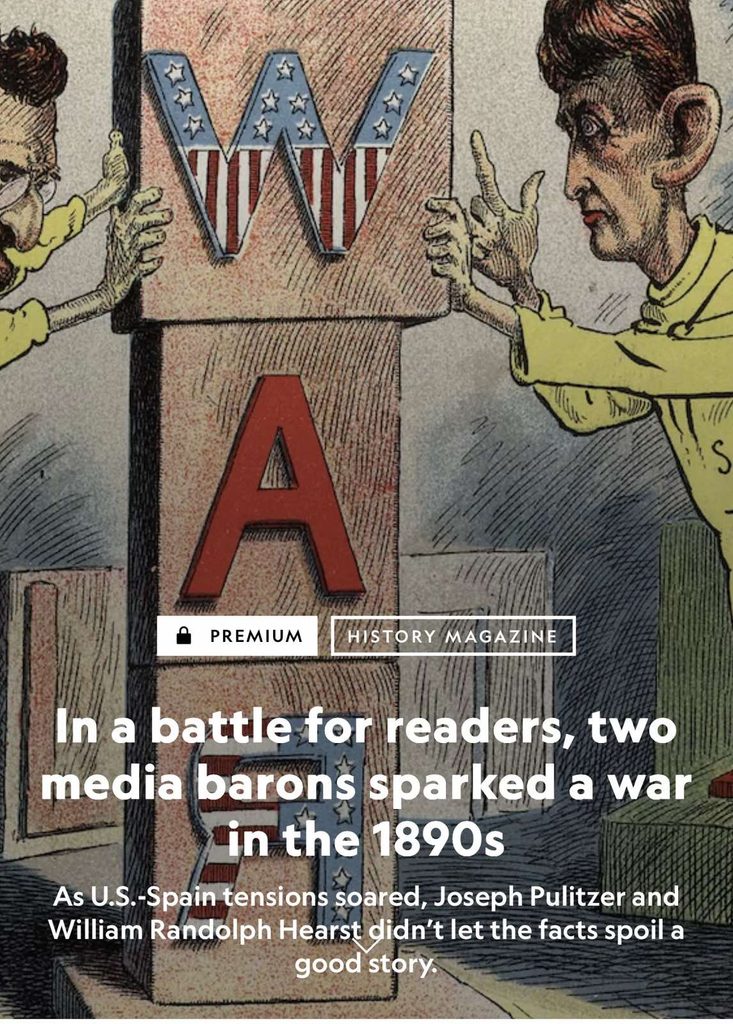
The survey on the honesty and ethical standards of journalists conducted in December 2025 by the US-based research firm Gallup is quite interesting. The results revealed that only 28% of the American public has trust in the news reported by mass media.
Looking at the results of this survey, it feels as though the integrity, honesty, and ethical compliance of journalists are being called into question.
If asked why trust has declined in this manner, the answer would be the presence of political bias and agenda perception. It is because people feel that some journalists are pushing a personal agenda rather than presenting facts.
Furthermore, there are instances of sensationalism and failures in source verification. Sensationalism refers to exaggerating news and using provocative terminology to gain people’s attention or excite them. Failure in source verification means publishing news without verifying whether the source is reliable prior to dissemination.
What Mistakes Did TIME and CNN Make?
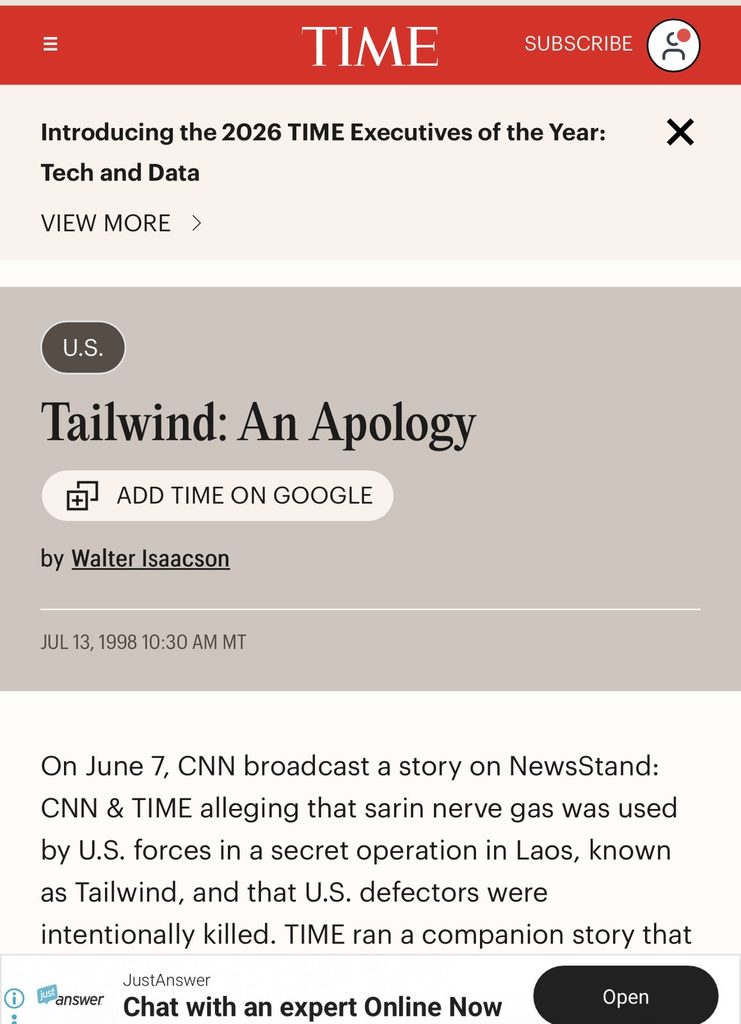
The Operation Tailwind incident jointly presented by TIME and CNN in 1998 is a prominent event in international news media history that serves as a warning regarding this issue.
During the Vietnam War in 1970, U.S. Special Forces conducted a covert operation named Operation Tailwind inside Laos.
On June 7, 1998, CNN’s program NewsStand: CNN & TIME broadcast extremely severe allegations regarding Operation Tailwind. TIME also published a companion article written by CNN journalists.
The main allegations of the story were twofold:
- First — The U.S. military used Sarin nerve gas in Laos.
- Second — The U.S. military conducted operations to hunt down and kill American defectors who had gone over to the enemy side.
Such allegations were no ordinary news. Because they involved U.S. military operations, the use of chemical weapons, and implications of war crimes, they constituted extremely grave allegations politically and militarily.
After the broadcast, strong denials emerged. CNN conducted an internal investigation led by renowned media lawyer Floyd Abrams. TIME also carried out its own investigation.
Ultimately, investigations from both sides reached the same conclusion: There was insufficient evidence to support the allegations that Sarin nerve gas was used or that American defectors were intentionally killed.
Walter Isaacson, then Managing Editor of TIME, later retracted the story on behalf of TIME and apologized.
In TIME’s own statement, it primarily admitted that “the facts simply do not support the allegations that were made.” This was a severe admission of error for a world-renowned magazine like TIME.
Where Did the Reporting Fail?
The most important lesson from this incident is that “having a source is not the same as the story being true.”
In CNN’s investigation and TIME’s subsequent review, statements from certain key sources suffered from issues such as:
- Not having directly witnessed the events
- Inconsistencies between past and later statements, as well as unclear meanings
- Insufficient independent evidence to verify the main premise of the story
For example, Admiral Thomas Moorer was portrayed in the report as someone who confirmed the use of Sarin, but in subsequent investigations, he stated that he had no personal knowledge of Sarin being used. CNN’s investigation also determined that his statements did not reach the level of supporting the main conclusions of the story. (The Washington Post)
In the statements of another key source, Robert Van Buskirk, there were also discrepancies between what he had previously written in his book and what he said in later interviews. (The Washington Post)
When piecing such facts together, a question arises:
“Are the facts confirming the idea the journalist wants to believe, or is the journalist gathering evidence to fit their preexisting belief?”
This is a crucial question in Journalism Ethics.
The Danger of “Confirmation Bias”
A key problem pointed out by CNN’s subsequent investigation in the Tailwind incident was that journalists ignored or downplayed information that contradicted their initial beliefs. (The Washington Post)
This situation can be called Confirmation Bias in journalism. Meaning: “seeking evidence that confirms what one already believes while discounting evidence that contradicts those beliefs.”
Why Did a Single Error Escalate?
The consequences of this incident did not end with the publication of a single piece of false news.
After the broadcast, the dignity and reputation of the soldiers and veterans who participated in Operation Tailwind were harmed.
Subsequent Pentagon investigations also found no evidence of Sarin usage and determined that the objective of Operation Tailwind was not to kill American defectors. The Pentagon stated that the chemical agent used was not Sarin, but potent tear gas. (TIME)
A piece of false news can be retracted later. However, retracting the impression left in people’s minds is far more difficult. This is one of the deepest lessons of this incident.
Can Retracting News Erase the Error?
TIME and CNN ultimately retracted the story and issued apologies. This was an important act of accountability under journalistic ethics.
Walter Isaacson of TIME also stated words to the effect of:
“Our credibility is our most important asset.”
He emphasized that credibility is the most vital asset, stating that if a mistake occurs, one must speak openly and correct facts quickly. (TIME)
However, while a retraction represents accountability, it cannot automatically erase all the consequences of the original mistake.
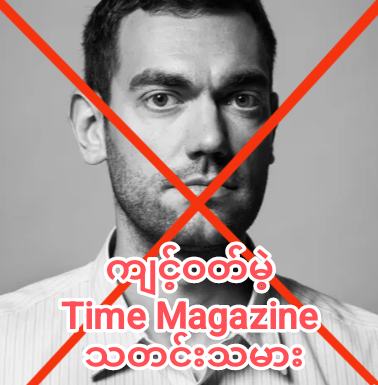
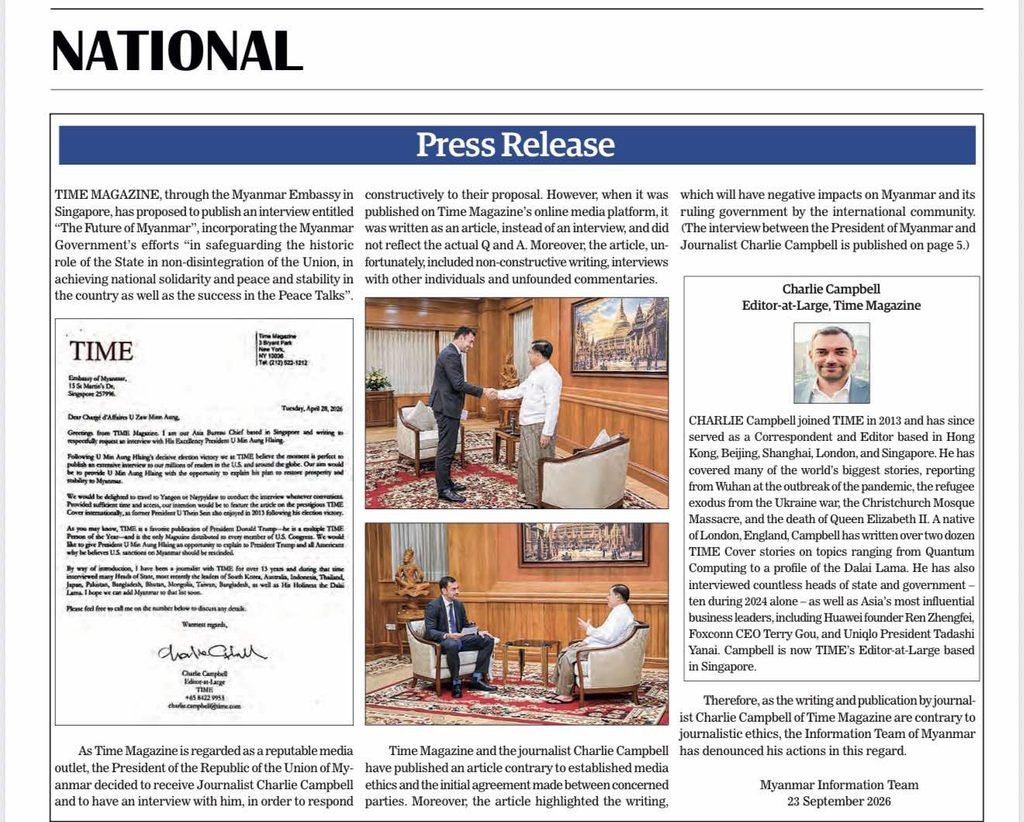
Who is Charlie Campbell?
If you read the article published on TIME’s page on September 23, 2026, it becomes clear who he is. You will also see his political bias and agenda perception. His hidden opinions and hidden agendas are evident.
A media outlet’s capital is not its office building, cameras, website, or follower count. It is credibility — trustworthiness.
Once lost, it takes a very long time to rebuild. The Tailwind incident carries a lesson deeper than just “journalists must not make mistakes.”
Since journalists are human, errors can occur. What matters is:
- Systematically verifying to prevent errors,
- Challenging one’s own assumptions,
- Listening to opposing facts,
- Refraining from writing if evidence is insufficient,
- Openly admitting and correcting mistakes when wrong.
The reminder that the Tailwind incident gives us is simple:
“The value of a news story should not be measured by how exclusive it is, but by how accurate and trustworthy it is.”
For a journalist, seeking the truth is a duty; creating truth as one desires, however, is exceeding that duty.
Words Spoken by Sayagyi Ludu Sein Win
It is evident that the respected Ludu Sein Win deeply loved journalism and journalists. When it came to journalists, he stood up to defend them completely. We are still reading, recording, and learning from his principles of journalism to this day.
I have read that he metaphorically referred to honest, integrity-driven, authentic journalists as “politicians without strings.”
However, Charlie Campbell from TIME magazine, as seen here, does not fall into the category of journalists described by Sayagyi Ludu Sein Win. Instead, infected by political viruses, he writes whatever unethical things he pleases and says whatever he wants. It makes me wonder if Sayagyi Ludu Sein Win were still alive today, would he label him an unauthentic journalist — a “politician with strings attached,” or a “cheap politician disguised as a journalist”…