
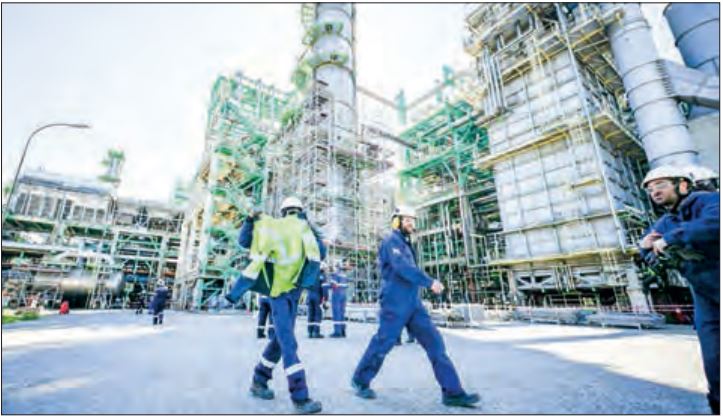
LOCATED at the mouth of the Seine where it meets the Channel, the TotalEnergies refinery in Le Havre forms a maze of more than 40,000 kilometres of pipes and towers, running at full capacity to keep planes flying and trucks moving across France.
Perched halfway up a 40‑metre‑high metal structure, technical head Elise Thomazo explains the hydrocracking unit, which converts crude into as much diesel and kerosene as possible for road and aviation use.
After distillation, a network of pumps and compressors separates fractions into petrol, diesel and jet fuel, stored in giant reservoirs painted by weight: black for heavy crude and bitumen, light colours for petrol.
The refinery has long focused on jet fuel and diesel — one half of France’s diesel consumption is imported — so the Middle East war has tightened supply even further.
The site supplies roughly 12 per cent of fuel sold at French petrol stations and about 11 per cent of the country’s plastics, relying on tankers from the US, Europe and Africa instead of the now‑sidelined Gulf.
AFP
#GlobalNewLightOfMyanmar