
By Chit Nay Zin Maung
Those who do good deeds will receive good results, while those who do evil may escape temporarily but cannot avoid the consequences of their actions forever. Just as a stone sinks immediately when dropped into water, wrongdoing and immoral conduct eventually bring suffering and misfortune to everyone, whether young or old, poor or wealthy. Everything good or bad that a person does returns to that person precisely, like an addressed letter or registered parcel. This is one of the truths taught in the Buddha’s teachings, although people often forget it.
A structure built with rotten wood may appear stable, but it will soon collapse. Similarly, an organization or enterprise established on impure or unsound foundations may seem to prosper for a while, yet it will eventually become unstable and fail.
The principles of truth were valid in the past, remain valid today, and will continue to be valid in the future. Therefore, anyone who wishes to progress, grow, and succeed must apply these principles firmly. We must learn to distinguish right from wrong, good from evil, benefit from harm, and gain from loss. We must also think carefully, weigh important and minor matters, and make correct decisions. The ability to judge wisely is itself the practical use of knowledge.
Reading helps broaden our outlook. We should develop an interest in old writings, good literature, and books that teach wisdom. We should also study different languages and practise until we can use them effectively. Proficiency in major world languages such as English, French, German, and Russian can bring great benefits. In the twenty-first century, Asian countries are developing rapidly, so learning Chinese, Japanese, Thai, or Malay can open further opportunities.
Artificial intelligence can provide translations, but people must still revise them to ensure that they are accurate and appropriate. Becoming proficient does not happen overnight. It requires five or ten years – or even longer – of continuous daily study and practice. With perseverance, knowledge can eventually be used effectively in real life. Mere amateur ability is not enough; we should work toward professional skill and genuine mastery.
Many people before us have reached high levels through determination and hard work. For example, U Pe Maung Tin earned a Master’s degree from the University of London at the age of twenty-four and became the first Myanmar professor among the foreign English and Indian professors at the University of Rangoon. We should also remember the contributions of distinguished scholars and professors such as Saya Zawgyi, Min Thu Wun, U Aye Maung, U Chan Mya, and Dr Ludu, who educated and inspired later generations.
Myanmar language and literature also deserve recognition. Myanmar needed a modern grammar and systematic structure in order to become an official language used in government offices. Encouraging people to learn English, Chinese, Japanese, or Thai does not mean that Burmese or the languages of Myanmar’s ethnic groups are unimportant. On the contrary, mutual understanding of languages is essential for building warm and respectful relationships among different communities.
The conflicts and unrest seen today are partly rooted in the failure to establish such understanding during the decades after independence. Although this truth is painful, we must learn from it. Unless the language barrier is removed, people will remain distant in mind and heart. If necessary work is neglected, we will continue striking at the problem without making real progress.
Reading and Vision
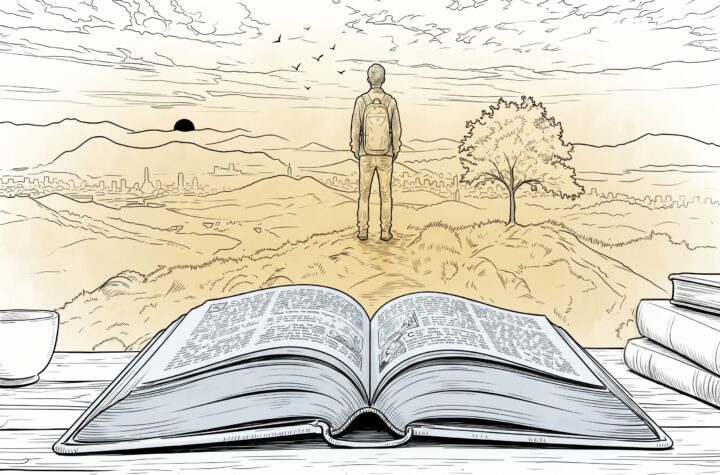
In summary, we need broad vision and foresight, and these are developed through reading. Good books enrich our thoughts and perspectives. A person without vision sees only the problem when difficulties arise. Someone with wider knowledge and understanding can identify possible solutions and judge the proper value of different choices.
By reading many books, we gain access to the ideas of educated people, scholars, and great figures throughout the world. We can then understand, learn from, and apply their wisdom.
Consider leadership as an example. How can we persuade people to do the work we want and move along the path we choose with enthusiasm and confidence? Leadership is not merely the ability to command. It is the willingness of many people to accept and follow a person’s influence.
Leadership does not require money, wealth, fame, or weapons. It requires upright character, love of truth, honesty, reliability, effort, and achievement. People respect those who can be trusted and admire those whose success can be demonstrated in practice.
A capable leader should possess many qualities, including:
Intelligence and mental ability
Diligence and industriousness
Social and emotional ability
Patience and endurance
Vision and foresight
Courage
Zeal and perseverance
Good moral character is the most important quality. Reading good books helps develop maturity. As we read more, our way of living, speaking, and behaving gradually changes. Just as a novice monk may become a fully ordained monk and eventually a senior abbot, a person’s mind can grow greater and nobler. In time, such a person may become a leader whom others respect, admire, and love.
Reading provides two major benefits: pleasure from literature and knowledge that develops our love of truth, abilities, and inner strength.
Becoming Your Own Leader
Who will drive you to become a good leader? No one else – it is you yourself. Basketball champion Michael Jordan expressed a similar idea in his book Driver from Within: the person who pushes you forward is the person within your own heart.
Robin Sharma’s book The Leader Who Had No Title presents the word IMAGE as a model for leadership:
I — Innovation: creating new ideas and approaches
M — Mastery: developing excellent skills and competence
A — Authenticity: being genuine and truthful
G — Grit: showing perseverance, diligence, and determination
E — Ethics: maintaining moral conduct and integrity
A complete and respected leader must develop all five qualities. Through truth, learning, reading, perseverance, and ethical conduct, each person can become the leader of their own life and contribute positively to society.
Reference: Yadanabon Daily (8 September 2026)