
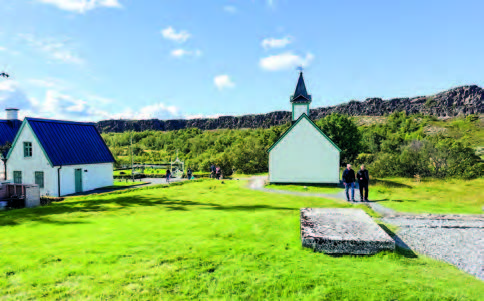
IN a grassy field at Thingvellir National Park, a modest lava-stone grave bears the name of Jonas Hallgrimsson, Iceland’s revered nineteenth-century poet and linguistic pioneer. Yet an enduring historical puzzle persists over whether the entombed remains actually belong to the literary icon or a Danish grocer buried nearby in Copenhagen.
Hallgrimsson died in 1845 following a fall down a staircase in Denmark, nearly a century prior to Icelandic independence. His body was interred in a crowded communal cemetery alongside several other individuals. In 1946, amid heightened patriotic sentiment following the proclamation of the Icelandic republic, authorities repatriated what were believed to be his remains. However, biographers note that after a century underground, the bones were severely degraded, fragmented, and thoroughly commingled with those of a Danish shopkeeper, his wife, and their child. Crucially, the recovered skeleton lacked both a skull and legs.
Prominent cultural enthusiasts, including well-known geneticist Kari Stefansson, have submitted formal applications requesting that authorities exhume the site for comprehensive DNA analysis. Stefansson argues that establishing scientific certainty honours Hallgrimsson’s profound influence on the national soul and romantic literary tradition. Nevertheless, officials maintain that exhuming the grave cannot proceed without an explicit judicial ruling, leaving the request stalled in legal committees and bureaucratic review.
Scholars remain divided on the necessity of resolving the ambiguity. While some historians dismiss the mix-up as an unfounded rumour, others argue that lingering uncertainty enriches the national mythology surrounding the beloved author. — AFP