
The recent official visit of Myanmar President U Min Aung Hlaing to India has created renewed interest in strengthening economic cooperation between the two neighbouring countries. As countries connected by geography, history, and culture, Myanmar and India have significant potential to expand bilateral trade, investment, and business partnerships. The visit provides an opportunity to further deepen economic engagement and explore new areas of cooperation that can contribute to sustainable growth and prosperity for both nations.
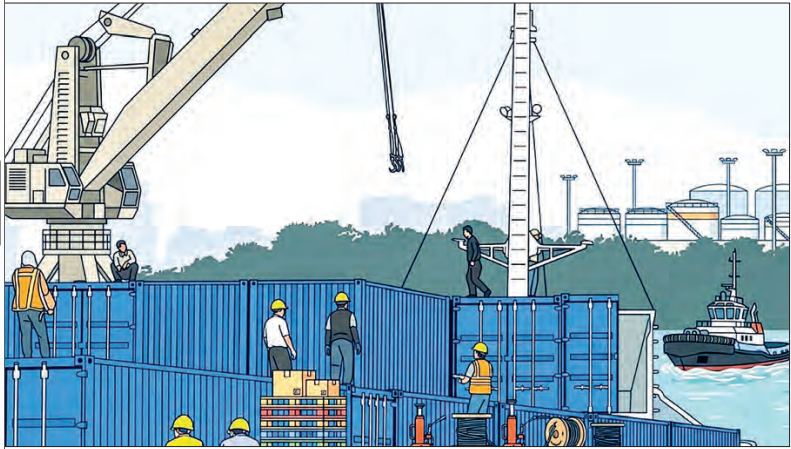
India is one of Myanmar’s important trading partners. Bilateral trade has continued despite global economic uncertainties, demonstrating the resilience of economic relations between the two countries. According to United Nations COMTRADE data, Myanmar’s exports to India reached approximately US$1.28 billion in 2024, while imports from India amounted to about US$359 million. Major exports from Myanmar include agricultural products, particularly beans, pulses, and other agricultural commodities, while imports from India consist mainly of pharmaceuticals, machinery, vehicles, electrical equipment, and industrial inputs. These trade patterns highlight the complementary nature of the two economies and the opportunities for further expansion.
Recent years have also seen efforts to facilitate trade through the use of local currency settlement mechanisms. The operationalization of the Rupee-Kyat Trade Settlement Mechanism represents an important step toward reducing transaction costs, simplifying payment procedures, and supporting businesses engaged in bilateral trade. Such initiatives can help small and medium-sized enterprises participate more actively in cross-border commerce and strengthen economic connectivity between the two countries
Foreign Direct Investment (FDI) remains an important driver of economic development for Myanmar. FDI contributes not only capital but also technology transfer, managerial expertise, employment creation, and integration into regional value chains. According to the ASEAN Investment Report 2024, ASEAN continues to be one of the most attractive destinations for international investment, with strong investor interest in manufacturing, infra.
structure, logistics, digital services, and renewable energy sectors. For Myanmar, attracting quality FDI is essential for industrial upgrading and long-term economic growth.
India possesses considerable strengths in sectors that are relevant to Myanmar’s development needs. These include pharmaceuticals, information technology, agriculture, food processing, logistics, renewable energy, financial services, and manufacturing. Greater Indian investment in these sectors could support Myanmar’s economic diversification while creating mutually beneficial business opportunities. At the same time, Myanmar offers significant potential through its strategic location between South Asia and South-East Asia, abundant natural resources, agricultural capacity, and young workforce.
Infrastructure connectivity is another area with strong economic implications. Projects aimed at improving transportation and logistics links between Myanmar and India can facilitate trade flows, reduce business costs, and promote regional economic integration. Improved connectivity can help businesses access larger markets, strengthen supply chains, and encourage investment in border regions and industrial activities.
Global investment conditions remain challenging. According to the World Investment Report 2025, worldwide FDI flows declined by 11 per cent in 2024 amid economic uncertainty and changing international investment patterns. Nevertheless, South-East Asia continued to attract strong investment inflows, with ASEAN recording a new record level of FDI. This demonstrates that the region remains an important destination for international investors and highlights the importance of maintaining an attractive investment environment.
Looking ahead, the recent visit provides a timely opportunity to strengthen economic cooperation between Myanmar and India. Increased trade, greater investment flows, enhanced business partnerships, and improved connectivity can generate benefits for both countries. As neighbouring economies with complementary strengths, Myanmar and India can work together to support sustainable development, create employment opportunities, and promote regional prosperity.
The future success of Myanmar-India economic relations will depend on continued efforts to facilitate trade, improve the investment climate, strengthen infrastructure connectivity, and encourage private-sector cooperation. If these opportunities are effectively utilized, the recent high-level engagement may serve as a positive foundation for expanding economic relations and unlocking new opportunities for businesses and investors in both countries.
References
ASEAN Secretariat. ASEAN Investment Report 2024. Jakarta:
ASEAN Secretariat.
Asada, H. (2021). “Determinants of
Foreign Direct Investment Inflows
to Myanmar.” Bulletin of Applied
Economics, 8(1).
Institute of Developing Economies (IDE-JETRO). Policy Review on Myanmar Economy: What
Myanmar Can Learn from FDI
from East Asian Countries.
Ramirez, MD, and Tretter, B
(2013). “The Effect of Myanmar’s
Foreign Investment Policies on
FDI Inflows.” International Journal of Accounting and Economics
Studies.
United Nations Conference on
Trade and Development (UNCTAD). World Investment Report
2024.
United Nations COMTRADE Database. Myanmar Exports to India
and Imports from India, 2024.
GlobalNewLightOfMyanmar