
By Lynn Lynn Myat Oo
Thingyan is more than just a joyful celebration filled with water, music, and laughter — it is a festival deeply rooted in history, language, and cultural meaning. The question “Why do we call Thingyan?” opens the door to understanding the origins and significance behind one of Myanmar’s most important traditions.
The word “Thingyan” is believed to come from the Sanskrit term “Sankranti”, which means “transit” or “movement”. Specifically, it refers to the transition of the sun from one zodiac sign to another. In Myanmar tradition, this transition marks the end of the old year and the beginning of a new one. Over time, the word evolved linguistically into “Thingyan”, adapted into the Burmese language while retaining its original meaning of change and passage.
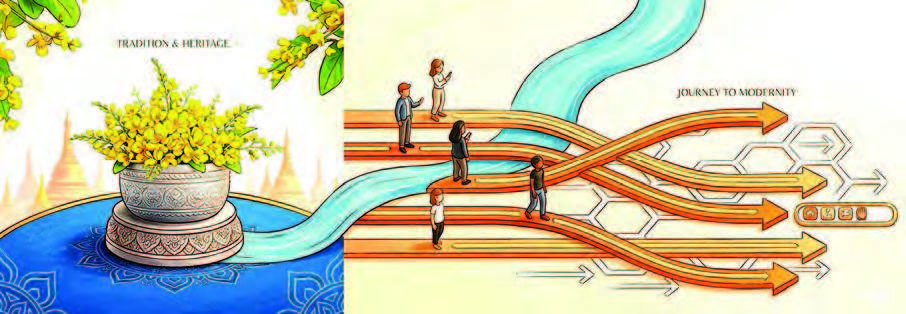
This idea of transition is central to the festival itself. Thingyan is not simply about celebrating the new year – it represents a shift, a moment of transformation. Just as the sun moves into a new position, people are encouraged to move forward in life by letting go of past mistakes, negativity, and hardships.
The use of water during Thingyan also connects to this meaning. Water symbolizes cleansing and renewal. By pouring water on one another, people are not only participating in a fun activity but also expressing a deeper wish – to wash away the old and welcome the new with a pure heart.
Historically, Thingyan has been influenced by both Hindu and Buddhist traditions. While its name and astronomical roots come from ancient Indian culture, its practices in Myanmar are closely tied to Buddhist values such as merit-making, kindness, and respect. This blend of influences has shaped Thingyan into a unique cultural identity that reflects the spirit of Myanmar.
Today, although Thingyan is widely known for its lively celebrations and public festivities, the meaning behind its name remains important. It reminds people that life is constantly changing, and each new year is an opportunity to start again — with hope, positivity, and a renewed sense of purpose.
In essence, we call it “Thingyan” because it represents transition — not only of time, but of the human spirit.
#TheGlobalNewLightOfMyanmar