
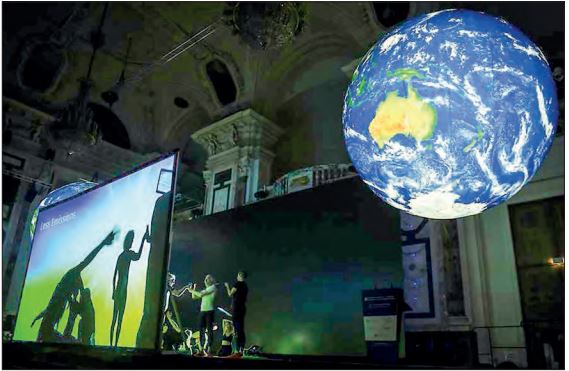
THE International Vienna Energy and Climate Forum, which concluded over the weekend, marked the first major global energy gathering since the latest US-Israel-Iran tensions, a conflict that erupted on 28 February and sent global energy prices sharply higher amid fears of supply disruptions.
Under the theme “Powering Prosperity, Security and Stability”, discussions focused on energy access, transition pathways and climate goals. Set against a backdrop of geopolitical uncertainty, the forum underscored a key message: while the Middle East crisis has exposed vulnerabilities in Europe’s energy system, it is strengthening the case for accelerating the global shift towards clean energy.
The latest conflict, which is under a fragile ceasefire, has posed a fresh stress test for Europe, still grappling with the fallout from the Ukraine crisis. Participants at the two-day forum underscored that such shocks can generate political momentum for long-term energy transformation.
In fact, on 2 April, just days before the forum, the French government launched a major renewable energy tender aimed at adding 15 gigawatts of offshore wind capacity by 2035, alongside expanded onshore wind and solar projects. According to official targets, fossil fuels’ share in France’s final energy consumption is set to fall from about 60 per cent currently to 40 per cent by 2030 and 30 per cent by 2035.
“Renewables are the clear solution for most countries because they are universally available,” said Hans Joachim Schellnhuber, director general of the International Institute for Applied Systems Analysis.
Austrian Foreign Minister Beate Meinl-Reisinger similarly framed renewable energy as “freedom energy”, arguing that true energy security depends on reducing reliance on a limited number of resource suppliers.
Spain, Portugal and Iceland, which are less dependent on imported fossil fuels and more structurally aligned with renewable energy, have weathered the current crisis better, according to Rana Adib, executive director of REN21. “This crisis is accelerating change,” she said, pointing to European Commission plans to expand electrification and decarbonization across all energy-consuming sectors.
Xinhua
#TheGlobalNewLightOfMyanmar