
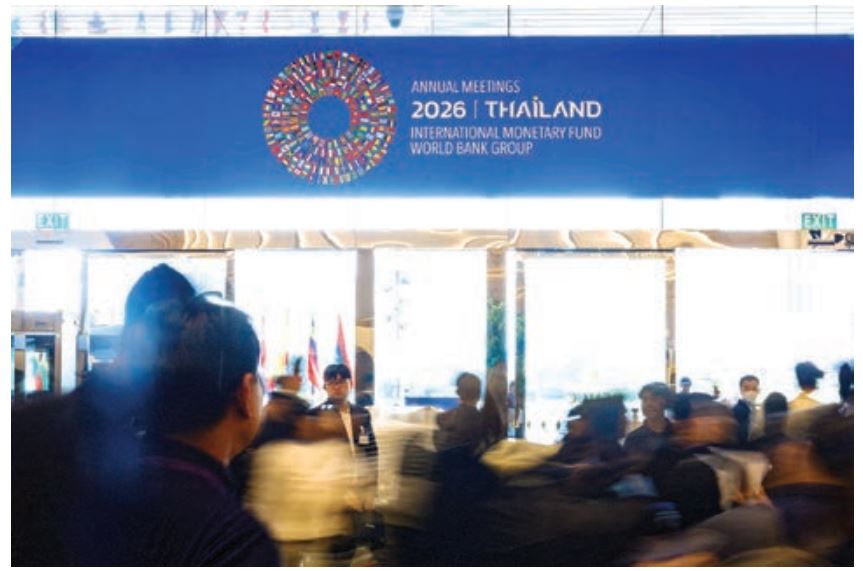
Finance ministers and central bankers meet in Bangkok this week for the annual gatherings of the International Monetary Fund and World Bank, with the global economy buffeted between the USIran war’s energy shock, rising debt pressures and the AI boom.
The meetings run from Monday through Saturday in the Thai capital, and will see policymakers tackle some stark choices, with the IMF calling on governments to rein in spending even as vulnerable citizens’ needs may be growing in the face of surging inflation and climate risks. The week will see a combination of high-level closed-door meetings, public events and policy announcements from the world’s top economic officials.
On Tuesday, the IMF will unveil its global economic forecast, along with detailed regional outlooks through the week, as policymakers set about tackling the challenges darkening the economic horizon. “To put it simply, the global economy is being pulled in two opposite directions: a negative energy supply shock and a positive demand shock from AI,” said IMF chief Kristalina Georgieva at an event kicking off the meetings in Singapore last week. “The combined impact of these two forces is highly uneven across the world.”
‘Perfect storm’
Chief among the concerns will be the economic fallout of the US war on Iran, which has seen energy prices skyrocket as Tehran’s retaliatory action has targeted Washington’s Gulf allies and curtailed global oil and gas supplies.
The IMF has warned that the effects of the shock have been unequal, with developing countries reliant on imported energy hit the hardest. Despite the crisis, the Fund has called on countries to curb spending on subsidies and instead build their fiscal buffers after years of shocks since the pandemic.
Critics say that approach is just not feasible for low-income countries, and that multilateral lenders need to do more. “The poorer member states of the IMF and World Bank are in distress from spillovers of the Iran war, rising interest rates in the West, and a climate crisis exacerbated by El Nino,” said Kevin P Gallagher, director of Boston University’s Global Development Policy Centre.
AFP
#TheGlobalNewLightOfMyanmar