
RICE stink bugs, a native species in Japan that feeds on rice, are rapidly increasing nationwide and causing widespread damage, with experts and the government warning that their habitat could further expand as global warming enables more of them to survive winter.
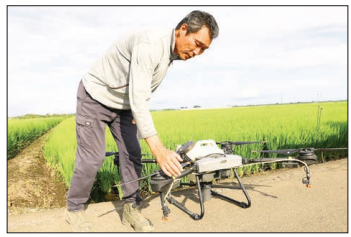
The Japanese government has confirmed the bug’s presence in 37 of the nation’s 47 prefectures, stretching from the Kyushu region in the southwest to Fukushima Prefecture in the northeast. “I absolutely do not want to suffer that kind of damage again,” said Masayuki Watanabe, a 58-year-old rice farmer in Tochigi Prefecture, north of Tokyo, as he operated a drone to spray pesticides on a rice paddy in mid-August. In 2024, his harvest plummeted to a third of the usual amount due to damage from rice stink bugs. He was determined not to make the same mistake again.
Damage was widespread across southern Tochigi Prefecture that year, prompting the prefecture to establish a task force in 2025 to tackle the stink bugs. The task force has since been sharing information on the best pesticides and when to use them and updates on the current state of infestations.
With the infestation also spreading this year to central and northern parts of the prefecture, a Tochigi official stressed the importance of spraying pesticide during heading and rotating the types of pesticides to maintain effectiveness.
Rice stink bugs overwinter in woodlands and then invade rice paddies around July when rice plants begin to head. They are believed to hide near the base of the plants during the day and feed on nutrients from rice ears at night.
It is thus recommended to apply the initial round of pesticides earlier than for other stink bugs, and then again when rice grains begin to form. The number of rice stink bugs decreased drastically after the 1960s to the point where they were considered extinct. Amid their recent resurgence, however, a survey by the Ministry of Agriculture, Forestry and Fisheries confirmed their presence in 37 prefectures as of 2025.
Kyodo
#TheGlobalNewLightOfMyanmar