
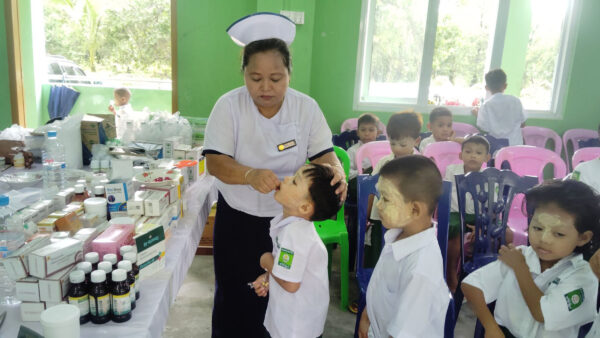
By Soe Moe
I was en route to PyinOoLwin, driving at a steady pace on the New Yangon-Mandalay Expressway when, out of nowhere, nostalgia struck.
Why so? Because at that very moment we were speeding through the same old area where I had travelled around repeatedly on many occasions during my government service in the township health department. This new highway had not yet been constructed then, and we had to use the old Yangon-Mandalay highway for supervisory tours. The area I am referring to is Pyawbwe Township in Mandalay Division.
At that time, I was serving as a Township Health Officer at the Pyawbwe Township Public Health Department, and I also served as the Secretary of the Township School Health Supervisory Committee.
With the Assistant Township Education Officer, Saya U Chit Khin, who was the Joint Secretary of the Township School Health Supervisory Committee, we used to go on supervisory tours.
What came to my mind was a particular tour we made travelling to Taung Lal Village, a remote area under the jurisdiction of the Thee Bin Rural Health Centre in the western part of Pyawbwe Township. This area was situated on the “Kyaww ma” Range (Central Yoma) in the dry zone of Myanmar. It was an administrative unit that grouped nineteen surrounding villages and was locally known as Shauk-Say-Naing Region (pronounced as ChaukSiDaing in the regional dialect).
This event took place 35 years ago, but I can still vividly remember what took place. We were at the time supposed to see what could be done to collaborate on health and education matters for that area.
On our return trip to town, using a jeep arranged by the township administration, a memorable little incident occurred which I now recall.
The organizational structure of the township’s School Health Supervisory Committee is, by mandate, uniform throughout the country, and each consists of the Township Medical Officer as the Chairperson, the Township Education Officer, the Vice-Chairman, and the other members are one headmaster each representing those from the high schools, one from middle schools, two from the 190 primary schools, the chairman of the township Maternal and Child Welfare Association, the township Sports Officer, the township Construction Engineer, and a Joint Secretary, who was the Assistant Township Education Officer. As the Township Health Officer, I served as the Secretary of the Township School Health Supervisory Committee.
That period was after the events of 1988. We, the health and education officials, were on very friendly and close terms, almost like family, working together in unity towards a common goal. Our firm belief was that if the school was not good, the village could not be good; and if the village was not good, the township could not be good; and if, in turn, the township was not good, the country could not be good.
We believed that the initiation of education and discipline for a nation begins at schools, and likewise the health of a nation must also start from the schools and thus nurture the future leaders of the country who are well educated, healthy and disciplined. We were thus determined to foster health awareness among young students.
The fact is, school health work is not an extra burden that hinders education; it supports education and is an integral part of school development, more like “killing two birds with one stone.”
The seven areas of school health work are:
(1) Environmental Sanitation (use of fly-proof latrines, access to clean water, personal hygiene, hand cleanliness and food sanitation.)
(2) Health Examination.
(3) Treatment when illness is found and referred if necessary.
(4) Communicable Disease Prevention and Control.
(5) School Nutrition Promotion.
(6) Health Education.
(7) Health-related Research, such as identifying the malnourished and monitoring physical growth.
We ensured that health education poems were taught in every high, middle and primary school within the township. We composed these poems and had teachers explain their meanings.
For security and privacy we instructed schools to build fences if they had none, encouraged them to plant Flowering, shady and edible plants within school compounds, and for health habits taught physical exercises (Sets 1 & 2), for sanitation promoted systematic waste disposal using garbage bins and pits with subsequent burning, taught poems about clean water to encourage upgrading water sources and using clean, handled drinking cups, ensured every school built fly-proof latrines, and instilled healthy habits like washing hands with soap or ash after using the toilet and for proper nutrition taught about the three food groups through poems to encourage eating balanced diet from all groups, promoted supplementary feeding and communal lunch for those who could bring a lunch box,
Our township committee distributed and taught the health education poems we had composed to all teachers during monthly meetings. Through the teachers, these poems were recited township-wide, their meanings explained, and they became widely used.
At that time, Pyawbwe Township had eight urban wards and 315 villages, with two high schools, eight middle schools, and 190 primary schools, totalling 200 schools.
As mentioned, 35 years ago, when Assistant Township Education Officer Saya U Chit Khin and I were returning from the ChaukSiDaing area by jeep on the Natmauk-Pyawbwe road, an unforgettable incident occurred near Pay Pin Lay Village, about 18 miles from Pyawbwe town.
Pay Pin Lay Village was located in a dry, arid area with no irrigation, making paddy cultivation unfeasible. In good years, they could grow upcountry crops like beans, maize, sesame, and cotton. In drought years, they collected dried plums from the plum tree bushes on the slopes around the village to sell, so the economy was not thriving.
By the Pyawbwe-Natmauk asphalt road stood the Pay Pin Lay village monastery with its magnificent building, gleaming with mirrored and gilded doors. The two-storey monastery roof was topped by layered, pointed multi-tiered spires (“Pyathart”) that seemed to pierce the sky. Next to it, on the east side, stood the school building, a simple structure with a thatch roof, bamboo mat walls, and wooden posts.
The education department’s goal of having well-built schools along both sides of the road had not yet materialized here.
As Saya U Chit Khin and I entered the school compound, a lively young woman in her mid-twenties emerged from the school building, greeted us, and introduced herself as a general worker from this Pay Pin Lay school.
We entered the school with her. There were no permanent partitions dividing the classes. Groups of students were scattered here and there, classes seemingly divided as convenient. Children of various ages were staring at us intently, curious about who those visitors might be.
The thatch roof of the school building, which nurtured the future leaders of Pay Pin Lay village, was full of holes – so many you could almost see the stars at night. But now, during the day, sunlight streamed through the holes, casting spots on the sandy floor below. The blackboards inside had lost their blackness, taking on a whitish hue. The young woman worker alone was teaching all the classes in turn.
When Saya U Chit Khin suddenly asked, “Where is the headmistress, young lady?” she hesitated to answer. Some students promptly shouted in response, “Teacher has gone to her plot to pick tomatoes, Sir!”
Saya U Chit Khin replied, “Oh, I see. Well, we’ll wait until tomorrow to meet your headmistress.” The students retorted, “Tomorrow, the teacher might go for alms to the Taungywa village over there!” Their answer made me want to laugh more than cry.
“Alright, children, even without the headmistress, can you recite the ‘UCI’ poem from the school health poems she taught you? I’d like to hear it,” I said.
“Yes, we can, Sir!” said the bright-eyed children, suddenly standing up from the floor, clasping their hands behind their backs, and beginning to recite the UCI poem in unison.
“ ယူစီအိုင် “
ရေခဲပုံးလေး ဆရာမလွယ်
ရွာထဲလာပြီကွယ်
ကလေးငယ်တစ်နှစ်အောက်
ဆေးထိုးပေးဖို့ရောက်။
ရောဂါခြောက်မျိုး ကင်းအောင်သာ
ကာကွယ်ပေးတော့မှာ
ဘီစီဂျီဟာ ကာကွယ်ဆေး
လက်မောင်းမှာ ထိုးပေး။
မေးခိုင်၊ဆုံဆို့၊ ချောင်းကြက်ညှာ
ဝက်သက် တင်ပါးမှာ
ပါးစပ်ကသာ တိုက်လို့ကျွေး
ပိုလီယိုတဲ့ဆေး။
ထိုးပေးတိုက်ကျွေး အကြိမ်မှာ
ဆက်ဆက်ထိုးတိုက်ပါ
သို့မှသာ စိတ်ချရ
ရောဂါခြောက်မျိုးကင်းမယ်ပ။
Universal Child Immunization (UCI) was a component of the Expanded Programme on Immunization (EPI), a routine immunization program for children under one year. Community health midwives maintained lists of eligible children in their areas. On scheduled days, vaccines were transported from the township hospital in large RCW-25 cold boxes to rural health centres, and from there, needed vaccine doses were carried in vaccine carriers on the shoulder of the midwife, maintaining the cold chain, to the vaccination sites.
At that time, there were only six kinds of vaccines. Based on practical needs and availability, the number of vaccine-preventable diseases covered has since been expanded, and today, antigens for 13 diseases are administered.
My point is that in such an economically disadvantaged rural area, teaching health education poems and explaining their meanings proved highly effective. Poetry is melodic, good to recite, and even more enjoyable when chanted in unison. From sound comes awareness, from awareness comes action, from action comes habit – this chain of behavioural change can be set in motion. This health knowledge, through children, can multiply to peers and spread back to parents, relatives, and the community at large eventually.
Previously, the under-one child immunization coverage in that area was very low. About a year after teaching these poems, through lessons from teachers about the benefits of vaccination, how vaccines could not simply be bought and administered even if you have money, and how vaccines produced abroad are carefully transported, maintaining the cold chain until they reach the child, knowledge spread to adults at home. As a result, UCI coverage in that area significantly improved, a fact I experienced firsthand.
Lost in memories of the past, passing by Pay Pin Lay village school near the current Yangon-Mandalay Expressway – which was formerly in the arid central range (Alel-Yoma) area locally known as “Kyaww Ma” – I felt an irresistible urge to see the village children again after 35 years.
The village monastery remained as majestic as before. The school building had also greatly improved, now a brick structure fully furnished with desks and benches.
After introducing myself to the teacher, I asked permission to have the children recite a poem. The teacher looked at me with a surprised smile. “Alright children, there’s a poem called ‘U C I’ that was once taught in your school long ago. I’d like you to recite it for me if you still know it. Students from your school recited it back then.” The children, just like over thirty years ago, stood up from their benches, clasped their hands behind their backs, and began chanting the ‘U C I’ poem.
Filled with amazement and joy, I watched the children reciting, and my thoughts drifted back to the realm of nostalgic memory.
The school health education efforts ignited by our Pyawbwe Township School Health Supervisory Committee over thirty years ago were still being passed down, firmly entrenched even today. I witnessed this firsthand.
Indeed, while physical facilities like school buildings and classrooms can be easily built with financial resources in a short time, the health awareness, attitudes, and practical actions of the students – the future leaders and good citizens – are matters of mindset. If we don’t start cultivating them today, we will be late in the future.
School health work is a nurturing task for future children, based on the foundation of health awareness. Among the members of the township School Health Supervisory Committee who worked hand-in-hand with me back then, most have passed away. Those remaining, I hear, are suffering from illnesses due to the ravages of age.
Recalling with satisfaction our approach of not just selecting roadside schools with good buildings for annual “model school” inspections – a process that did seem like a superficial competition – but striving to include all schools across the township, I felt a surge of pride.
While feeling this pride, I listened to the students of Pay Pin Lay Primary School in Pyawbwe township, located at the foot of the “Kyaww Ma” range along the Pyawbwe-Natmauk road, finish their recitation. I applauded heartily and with deep appreciation.
May the sound of children reciting poems like that from this village school, and supportive gestures like my applause, transcend the plains of Pay Pin Lay village at the foot of the “Kyaww Ma” range and spread throughout all of Myanmar.
#GlobalNewLightOfMyanmar