
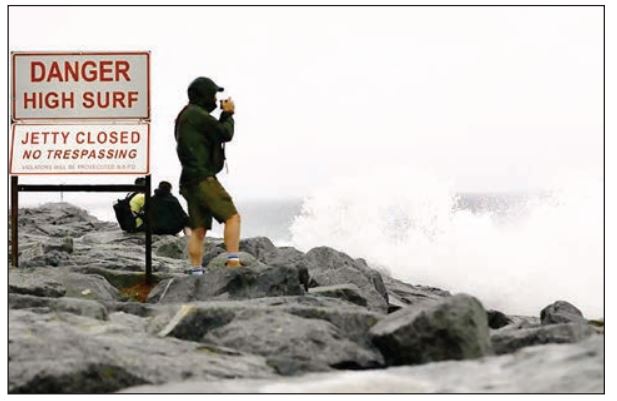
POWERFUL surf generated by the remnants of former Hurricane Marie battered Southern California’s coast last week, stripping sand from beaches, damaging homes and walkways, and exposing once again the vulnerability of oceanfront communities. “With global warming, superstorms and ocean current shifts, I’m afraid it’s only going to get worse,” former Malibu resident SA Baker told Xinhua. “Las Vegas might be beachfront property one day if this keeps up”.
The worst damage was reported along the Alamitos Peninsula in Long Beach, where days of large breaking waves overwhelmed sand berms and pounded a seawall protecting homes packed tightly between the Pacific Ocean and narrow streets. At least 24 oceanfront homes were placed under evacuation orders while officials assessed structural damage and possible foundation undermining. The immediate trigger was the swells generated by Hurricane Marie, which remained far offshore but sent long-period waves towards south- and southwest-facing beaches.
Such swells can carry substantial energy over long distances and produce powerful breaking waves when they reach the coast. The combination of high surf and high astronomical tides increased the risk of coastal flooding and erosion.
A strengthening El Nino could bring wetter and stormier conditions to Southern California later this year and into the winter, potentially increasing coastal flooding and erosion risks. “Unfortunately, this is just a preview,” climate scientist Daniel Swain said in a public discussion last week, warning that coastal flooding risks could grow in the fall and winter if El Nino conditions intensify.
Xinhua
#TheGlobalNewLightOfMyanmar