
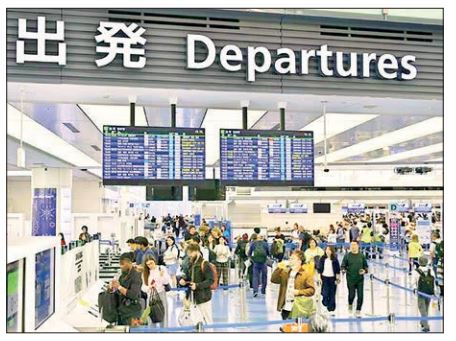
THE Japanese government on Wednesday tripled the departure tax to 3,000 yen ($18) per person to fund measures against issues arising from the surge in inbound tourism. Fees for foreigner visitors who need visas to enter Japan were also hiked on Wednesday, rising fivefold to 15,000 yen for single-entry and 30,000 yen for multiple entries.
Meanwhile, on the same day, the government reduced passport application fees for Japanese nationals to make up for the added burden from the departure tax. The tax is collected through travel ticket purchases, regardless of the passenger’s nationality. The government will use the tax income primarily to finance measures aimed at easing congestion, such as setting up designated areas at popular photo spots that are often crowded with foreign tourists.
It will also support regional tourism initiatives, such as turning local railways into tourist attractions and renovating station buildings, in an effort to attract visitors away from heavily congested areas.
Travelers transiting through Japan and staying less than 24 hours in the country, as well as children under the age of 2, are exempt from the tax. Passengers who purchased their travel tickets by Tuesday were charged the original departure tax of 1,000 yen. Known officially as the international tourist tax, it raised about 49 billion yen in fiscal 2025 ended March and is expected to generate around 130 billion yen in fiscal 2026.
The tax is collected by airlines, cruise lines and travel agencies upon purchase of air and sea tickets departing Japan and remitted to the government, according to the Japan Tourism Agency. The hike in entry visa fees was the first increase since 1978.
Kyodo
#TheGlobalNewLightOfMyanmar