
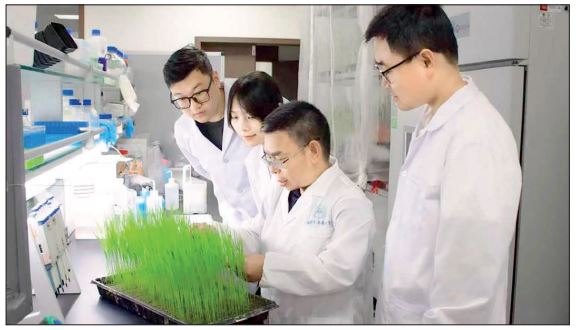
IT is a “molecular spy” that slips into rice cells, hijacks the plant’s immune defenders and leaves the crop defenceless. But now, after a decade of detective work, Chinese scientists have not only exposed the invader but also found a way to fight back. Researchers from Sichuan Agricultural University in southwest China have identified a previously unknown weapon used by rice blast fungus, one of agriculture’s most destructive pathogens.
The findings were published on 20 May in the journal Nature. This discovery offers a new strategy for broad-spectrum crop disease resistance breeding and environmentally friendly disease management, Chen Xuewei from the university’s State Key Laboratory of Crop Gene Exploration and Utilization in Southwest China, who also led the research, told Xinhua on Tuesday. Rice blast is a fungal disease that attacks rice plants, causing lesions on leaves, stems and grains. Globally, it reduces harvests by 10 to 30 per cent each year.
For China, the world’s largest rice producer, the stakes are high, as rice is the staple food for hundreds of millions, especially in southern China, where it is consumed at almost every meal. In 2025, China produced 209.04 million tonnes of rice, according to the National Bureau of Statistics. The team discovered that the rice blast fungus secretes a long non-coding RNA molecule, which they named “lnc117761”.
Xinhua
#TheGlobalNewLightOfMyanmar