
By Min Min Zan
Sometimes, while going about our daily journeys, we come across scenes that catch our attention. Among these scenes, there are things that make us feel gentle, thoughtful, emotional, or reflective in different ways. I myself am a person who travels and moves about almost every day, so I often encounter such scenes.
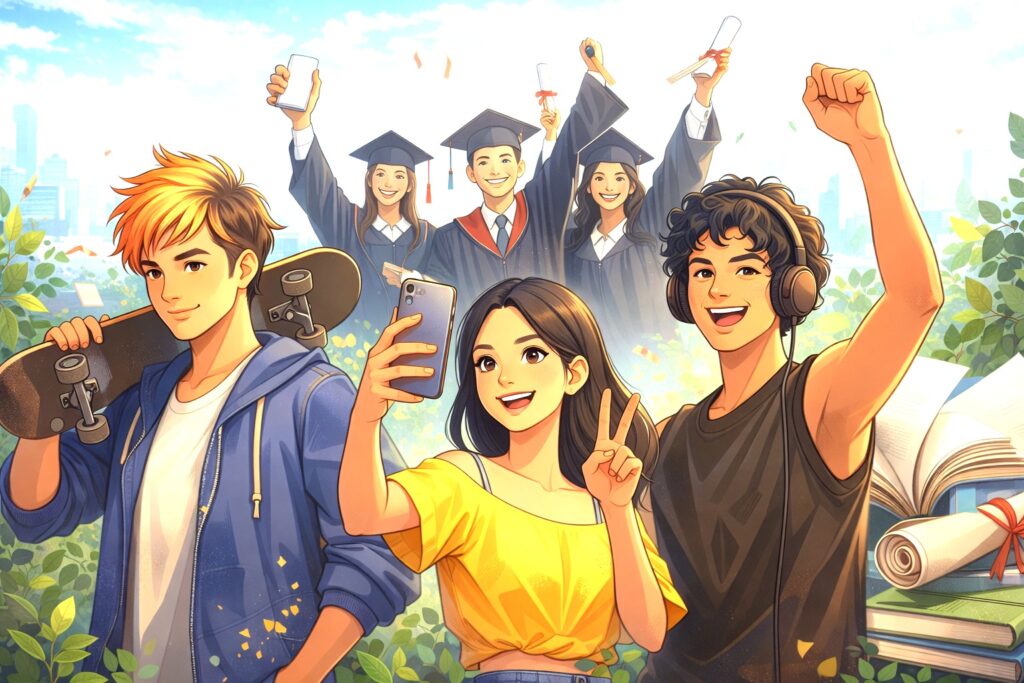
In particular, what I frequently see these days are young people in their late teens. When I see these young people, I first notice them, then think about them, and after that, the issue of “youth and rights” begins to occupy my mind.
Once, while I was passing through a market area, I saw two young men. One of them had dyed his hair. The other had his hair styled strangely, with part of it standing up thickly and heavily. In modern terms, it could be called “fashion.” Both of them were wearing T-shirts and jeans. I could not help smiling when I looked at them. The reason was that, as young people, they were making use of the rights that belong to youth.
As for me, I am only around thirty years old. However, because I am a civil servant, I cannot dress and behave as freely and casually as those teenagers. Because of my surroundings, my age, and my awareness, my lifestyle has become more like that of an adult. So, although I am still called a young person, I am no longer a “real” young person.
But are the young people I mentioned earlier real young people? Once, I read in a journal an article criticizing hair styling, hair length, and hair dyeing, saying that these things were blamed on only a small group of people. Young people think in a youthful way, and adults think in an adult way.
What I found was that younger people want to try many different hairstyles. I can accept this as their right. In modern times, fashion in hairstyles is constantly changing, and people naturally follow these trends.
If we think carefully, it can be said that in youth, one should take the rights that one has, but they should be taken with proper limits and self-control. Wearing flashy clothes, dressing in a striking way, piercing ears, and dyeing hair – young people tend to take as many freedoms as they can.
Look at the young girls. Some cut and part their hair in different styles. Some wear clothes so tight that they cling closely to the body. Some dress in strange and unusual ways. Some go out wearing necklaces and bracelets. These, too, may be considered forms of freedom and rights.
When I think about the rights of young people, my mind at first goes to such outward matters. Nowadays, young people also give much importance to external appearance and material things.
About six months ago, I happened to look again at some photographs taken of my friends and me at Yangon Institute of Technology. When I examined them carefully, our group of friends looked just like figures from old films. From this, it is clear that the rights of young people are not only about outward appearance.
The true rights of youth should be based on their youthful qualities, such as being young and tender, being energetic and quick, and being healthy and strong. They should be used to search for life paths and future goals.
For example, at the age of twenty, I could go around freely to find training courses and opportunities. At that time, after finishing school and entering university, I was very eager and curious to learn. I used to move quickly from one place to another, wondering which subject to study and how to study it.
Now, although I am not in my forties or fifties, I can no longer behave like those in their late teens. In everything, I have become more cautious and restrained. It is clear that I can no longer live as lightly and freely as a young person. In this way, some of the rights of youth are gradually lost.
What I want to say is that young people possess great potential and strength. If they use their rights not only for their appearance but also for their own lives and future, and if they express their talents and abilities through the rights of youth, they will surely gain success and achievement.
I would like to say that young people should fully express and make use of their rights during their youth, together with the other rights they possess. Only then can a young person truly be said to be using his or her rights in a complete way.
Once, I read an essay by U Aung Thin, which was written with reference to a book by Saya Maung Sein Win (Padigon). From that essay, I understood that Maung Sein Win, as a writer, had been able to use the rights of youth well. Indeed, it is true. Excitement, love, and sorrow are felt more deeply in youth. When such feelings are transformed into art by creative people, the result becomes powerful and deeply satisfying artistic works. This is a clear example of how a young person’s rights can be used positively in the field of art.
Let us think about other matters as well. The most important of all for young people is education. Although youth and their freedoms seem temporary, they are actually crucial for the future. If a student skips basic education or is absent from university classes, this leads to dropping out and failing to complete courses, and in the end, it becomes difficult to graduate successfully. This is a misuse of one’s rights. Instead of skipping school, attending classes regularly and using one’s youthful intelligence to study subjects seriously is the correct way to use the rights of youth.
Education alone is not enough; we should also consider other areas of life. If a young person thinks, “I am young, I can drink, smoke, fall in love freely, live as I like, fight whenever I want, sleep and eat as I wish, and spend all the money I earn,” and uses all his rights only in this way, then sooner or later he will lose all his rights. Not only that, but he will also lose the rights that young people truly deserve.
Later, when age advances, and a person becomes weaker, he will look back with regret at his younger self and at the younger people around him who are able to act freely, lightly, quickly, and energetically. As for me, although I am no longer a young person, whenever I meet young people, I feel encouraged by their strength and energy, and I gain motivation myself.
In this sense, I believe that I made good use of the valuable rights of youth when I was young. If there are people who wasted their youth by living carelessly, then their regret during adulthood and old age will be even stronger.
As I travel from place to place and observe different scenes in daily life, I feel happy when I see young people who truly and fully use their rights in a proper way. Such young people, I regard as “real youth,” and I respect and admire them. When I see young people who only use their rights for outward appearance and fashion, I feel that they are merely pretending to be young and that they are misusing the rights of youth.
I understand that today’s young people are often judged only by their appearance. However, when I see young people who, without being obsessed with physical beauty or passing trends, use all the rights of youth fully and positively, I feel even more admiration and encouragement for them.
Rights do not come twice. Likewise, youth does not come twice. Therefore, in the only youth that comes to us, we should fully and properly use the valuable and meaningful rights that belong to that stage of life. Only by doing so can life move forward, new opportunities be created, and one’s abilities be developed.
The right to beautify one’s appearance is something that will fade with age. But if we reflect deeply on this, young people who truly understand their rights and use them fully and correctly will surely appear. This is what I strongly believe and sincerely hope.
(Source: Translation of the article written by Hsuu Thit in The Yadanabon Newspaper on 6 February 2026)
#GlobalNewLightOfMyanmar